
Read-Aloud Techniques That Keep Kids Engaged
- read-aloud
- engagement
- parenting
- tips
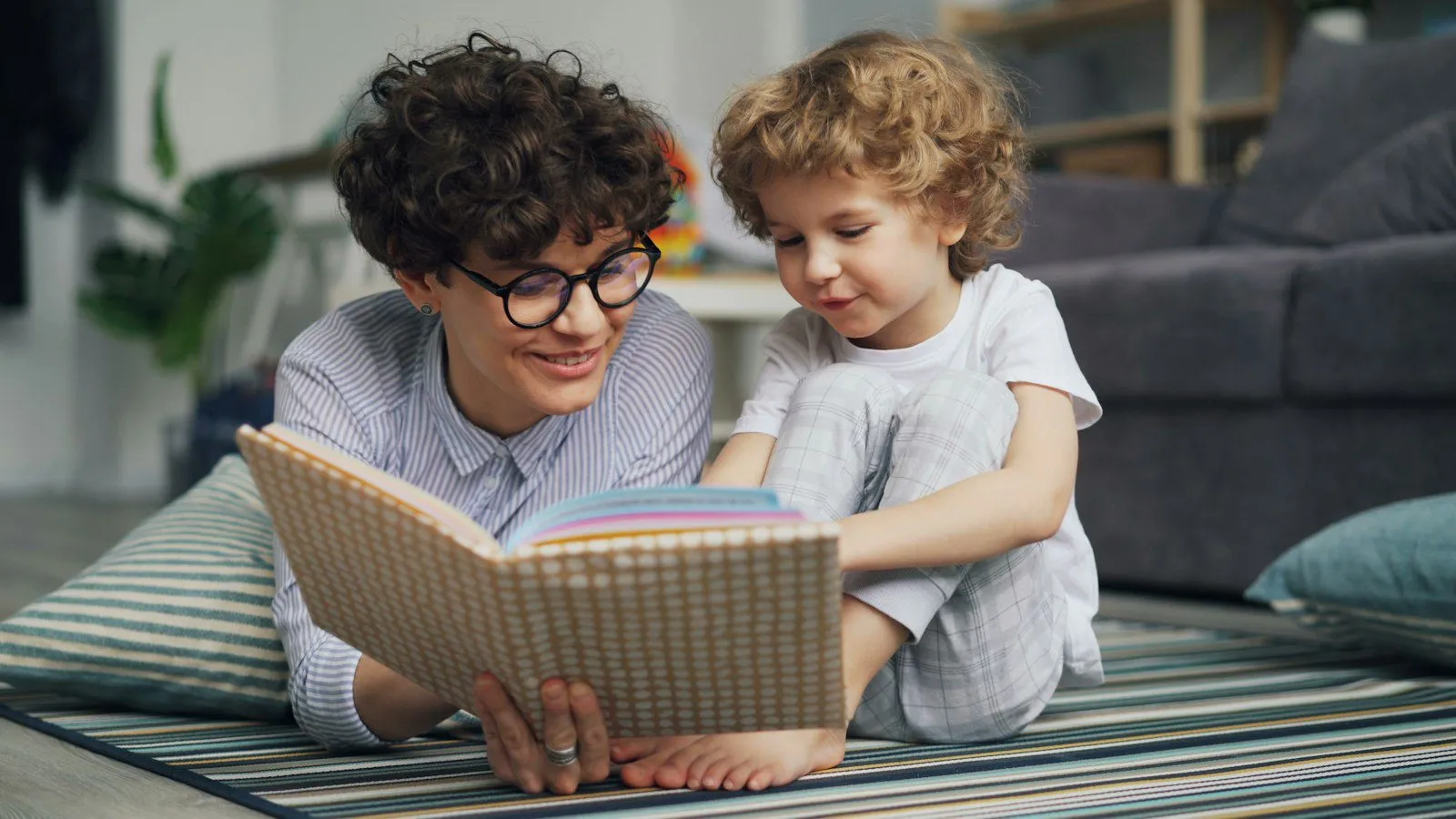
The read-aloud techniques that keep kids engaged have less to do with the book than with how you perform it. A child who leans in and begs for "one more page" is responding to your voice, your pace, and the room you leave them to join in — all skills any parent can learn, no theater background required.
Here are the techniques that reliably turn a flat reading into one your kids actually want.
Perform it: voice, pace, and the pause
Your voice is the whole instrument, and small changes do enormous work. You don't need distinct voices for twelve characters — you need contrast, enough variation that a child feels who's speaking.
- Slow down. New readers-aloud almost always rush. Reading slower than feels natural gives kids time to build the pictures in their heads.
- Use volume as a tool. Drop to a whisper for a secret and kids physically lean toward you. A sudden louder line lands a surprise far better than a steady drone.
- Give big characters a hook, not a whole accent. A giant is simply slower and lower; a mouse quicker and higher. One reliable trait beats a perfect voice you can't reproduce on page forty.
The single most underused technique: the pause. Stop right before the page turn and hold the silence a beat longer than feels comfortable. That gap is where anticipation lives — where a four-year-old holds their breath. Silence isn't dead air; it's suspense.
Invite them in with dialogic reading
The biggest shift you can make is to stop treating read-aloud as a monologue and start treating it as a conversation you host. Researchers call this dialogic reading: the child does more of the talking, and you follow their lead.
In practice it's a gentle loop — prompt, listen, build on the answer, repeat the fuller idea back so the language sticks. You're not quizzing; you're chatting with the book as your shared subject. Weave in prompts like:
- "What do you see on this page?" — endlessly generative for younger kids.
- "Why do you think she did that?" — nudges toward motivation and empathy.
- "Has that ever happened to you?" — connects the story to their life, which cements it.
- "What would you do?" — turns a passive listener into a participant.
You'll read far fewer words this way, and that's the point. Half a book you actually talked about teaches more than a whole one you rushed.

Let them predict, participate, and read the pictures
Kids love being one step ahead of a story. Stop before a repeated refrain and let them shout the missing line. Pause at a cliffhanger and ask what happens next, then read on to see if they were right. Being right is thrilling; being wrong in a fun way is almost as good.
Participation can be physical, too. Let toddlers turn pages, do the animal sounds, knock on the "door," or stomp across the room. Movement isn't a distraction for young kids — it's often how they stay in the story. And for repeat readings of a beloved book, hand more of it over each time until it becomes their book.
Don't skip the illustrations, either. In picture books the pictures are half the story, and most parents fly right past them. Point out the cat hiding in every scene or the character's face falling before anything is said. Reading the pictures gives pre-readers a way to "read" independently, builds inference, and naturally slows the pace. Ask "What's happening over here?" about a corner of the image and you'll often get the most engaged stretch of the session.
Keep it fun, not perfect
Here's the permission slip: your read-aloud doesn't need to be polished. Kids aren't grading your performance — they want your attention and playfulness far more than your accuracy.
- Follow their energy. If a book is dying, abandon it. A forced read-aloud teaches kids that stories are a duty.
- Short and warm beats long and tense. Five engaged minutes beat twenty white-knuckled ones.
- Repetition is normal and good. The tenth reading is how young kids master language — lean in and find new details.
- Some nights you'll be flat, and that's fine. When your performance tank is empty, a gently narrated story can carry the room while you're still the warm body beside your child. Tools like Noctly can voice a personalized story aloud — a nice backstop for the nights your read-aloud reserves are gone.
The through-line of every technique is the same: engagement comes from interaction, not perfection.
Key takeaways
- Perform with contrast, not perfection — vary pace and volume, and use pauses to build suspense.
- Make read-aloud a conversation with dialogic reading: ask open questions and follow your child's lead.
- Let kids predict, participate with voices and movement, and read the pictures as carefully as the words.
- Prioritize fun and connection over flawless delivery; short and warm wins.
- On tired nights, a narrated story can cover for you while the closeness still counts.