
When Should You Start Reading to Your Child?
- early literacy
- parenting
- read-aloud
- milestones
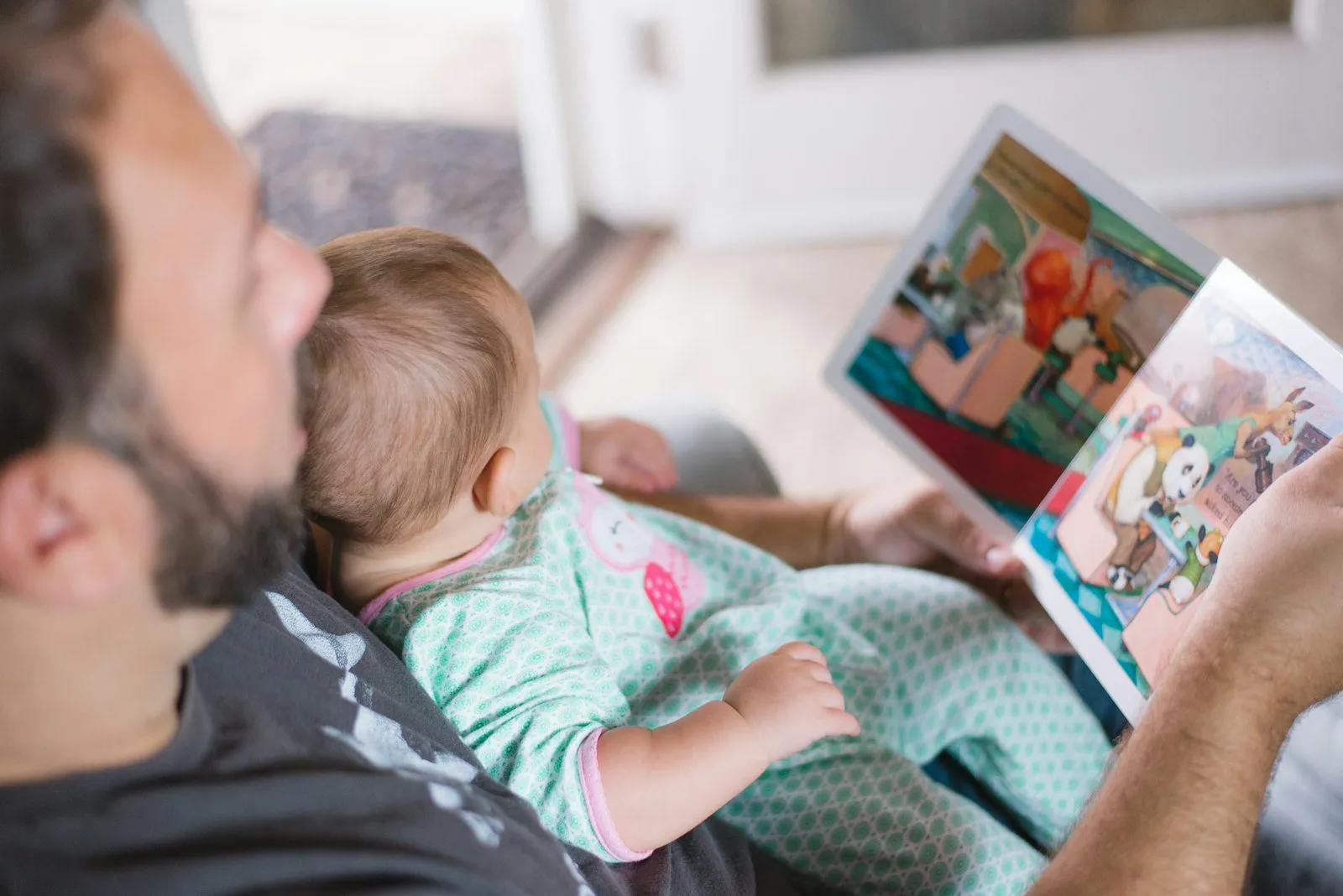
You should start reading to your child from birth, or even before, because it is never too early. A newborn cannot follow a plot, but reading aloud was never really about the plot; it is about your voice, your closeness, and the slow accumulation of language and comfort that shapes a child long before they say a word. Here is what reading looks like, and what it does, at each stage from newborn to preschool.
Reading to newborns: it starts with your voice
Reading to a two-week-old can feel faintly absurd. They cannot see the pictures clearly, do not understand the words, and may fall asleep on the first page. Do it anyway, because at this stage the content is beside the point. What your baby takes in is you.
A newborn already knows your voice, having listened to it from inside the womb. Hearing it again, warm and rhythmic, is deeply regulating, and reading aloud is a reliable way to give your baby a steady stream of it. The rhythm and melody of read-aloud language, the rise and fall, the rhyme and repetition, are also the raw materials of speech, which infants soak up long before they produce any.
Practically, this is the easiest reading stage of all. There is no wrong book. You can read a novel, a magazine, or a board book, and your baby gets the same benefit. Hold your baby, keep your voice gentle, and do not worry about attention span. A few minutes is plenty.
Infants: books become objects to explore
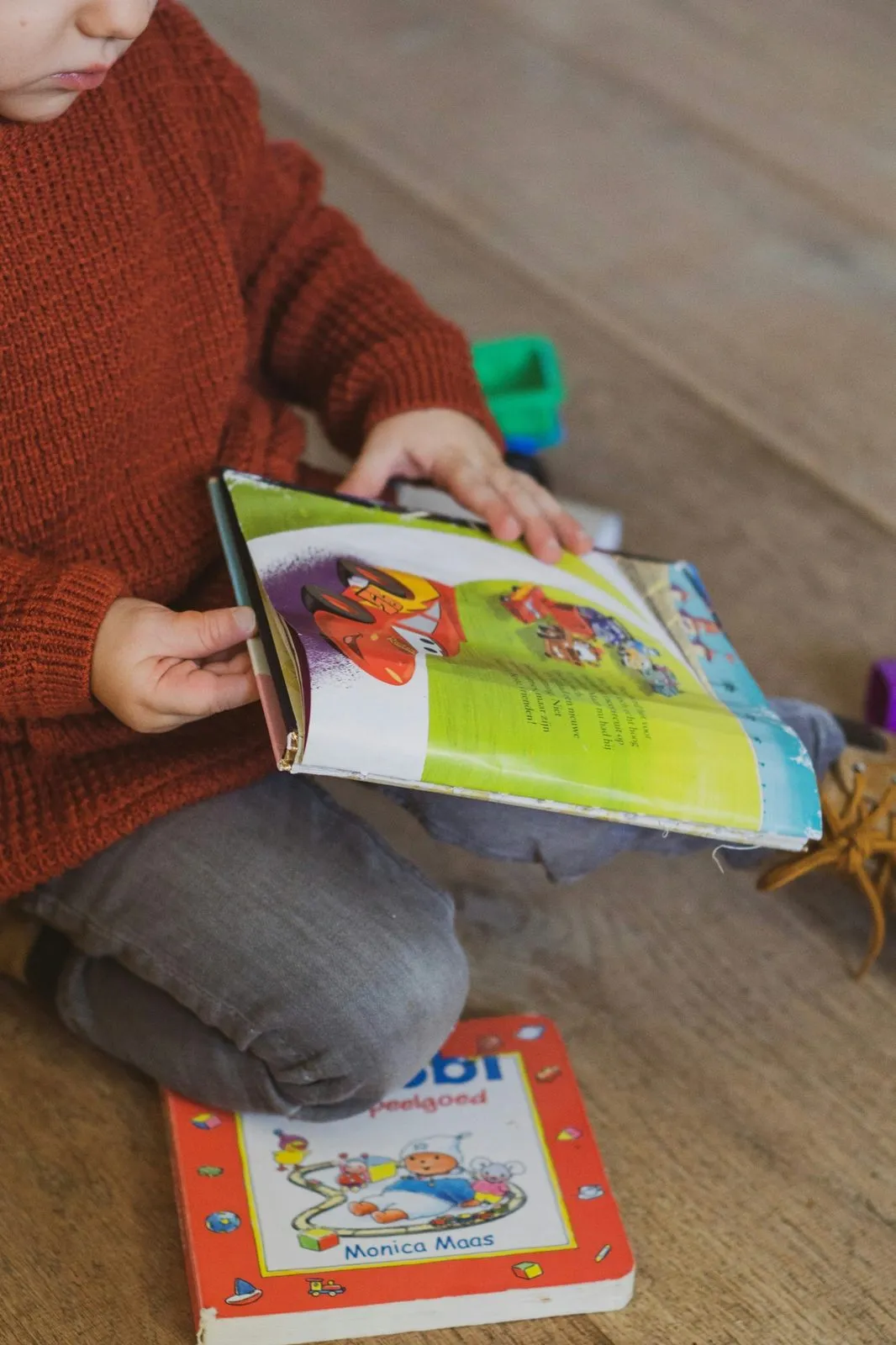
Somewhere in the first year, books stop being background and start being things. Your baby wants to grab the pages, put a corner in their mouth, and slap the picture. This is not misbehavior; it is exactly how an infant learns what a book is.
This is the age for sturdy board books, cloth books, and the indestructible kind. Expect the experience to be physical and non-linear. You will read the same three pages out of order, skip to the end, and start over, and that is fine. Follow your baby's lead. If they are fascinated by one image, linger and name what you see: "That's a dog. The dog is brown. Woof."
Naming is the real work here. Point at pictures and label them, make the animal sounds, exaggerate your expressions. Books with high-contrast images, simple faces, textures to touch, and lots of repetition are ideal. You are building the earliest links between a word, a picture, and a meaning, and teaching your baby that books are a source of connection and delight.
Toddlers: participation and a thousand rereads
Toddlers turn reading into a conversation. They point, they name things back, they lift the flaps, and above all they demand the same book again. And again. And again.
That relentless rereading can wear a parent down, but it is one of the most valuable things happening. Repetition is how a toddler masters a story. Each time through, they anticipate the next page, chime in on the phrase they know, and notice a detail they missed. The comfort of a predictable, familiar story is real developmental work, so indulge it even when you have the book memorized.
Make reading interactive. Pause before a familiar word and let your toddler fill it in. Ask simple questions: "Where is the ball? What sound does the cow make?" Books with rhyme, repeated refrains, and flaps invite the child to participate rather than just watch. Do not expect a toddler to sit through a whole story politely, either; a wandering toddler who circles back is still listening, and short bursts across the day count just as much.
Preschoolers: real stories and big questions
By the preschool years, your child can follow a genuine narrative, and reading opens up dramatically. They track a plot across many pages, remember what happened earlier, predict what might come next, and care deeply about how it ends.
Preschoolers use stories to make sense of their world and their feelings. A book about starting school, a new sibling, a doctor visit, or being scared of the dark gives a child language for an experience and a safe way to rehearse it. Talk about the story as you read: ask what a character should do, why they felt sad, what your child would do in the same situation. These conversations build comprehension and empathy at once.
This is also where personalization shines. Preschoolers are intensely interested in themselves, so a story starring a hero who shares their name, their pet, or their exact worry lands with unusual force. A tool like Noctly can create an illustrated, narrated story built around your own child, a lovely way to turn a real transition into a story with a calm, confident ending, right as their imagination is taking off.
Key takeaways
- It is never too early to start; you can read to your child from birth, or even before.
- For newborns, the value is your voice and closeness, not the content, so any book works.
- Infants explore books as objects; use sturdy board books and name what you see.
- Toddlers thrive on participation and rereading, so embrace the same book on repeat and read interactively.
- Preschoolers follow real stories and use them to process feelings; discuss the plot and lean into personalized stories, including tools like Noctly.